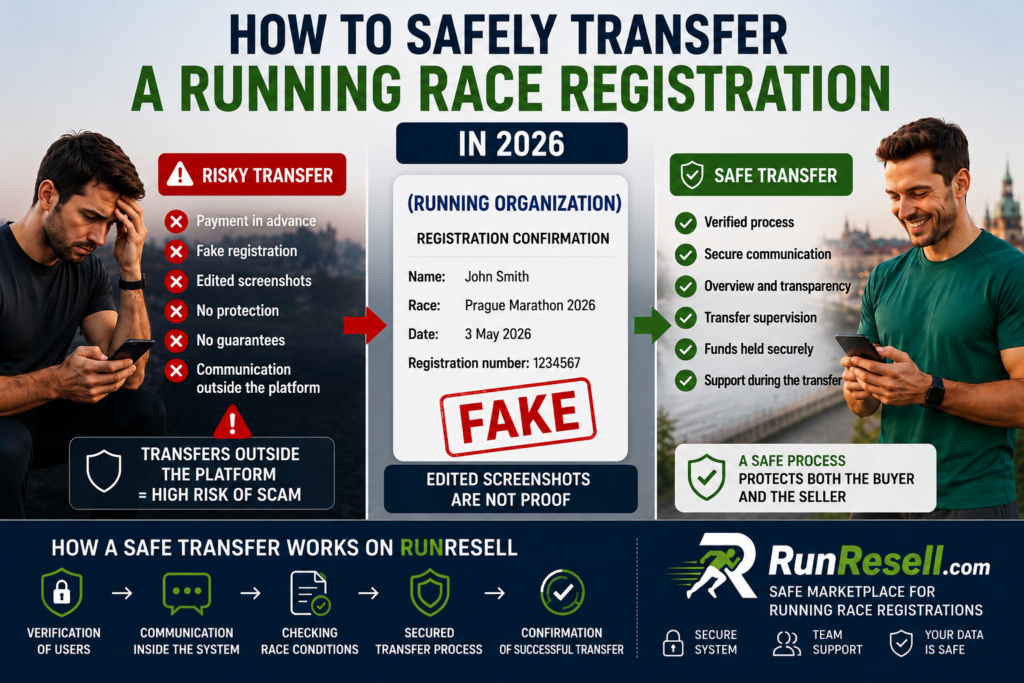
How to Safely Transfer a Running Race Registration in 2026: A Runner’s Guide
Unable to run a marathon or half marathon due to injury? Find out how to safely transfer your entry fee to another runner in 2026, spot AI-generated fake screenshots, and navigate various European race registration systems.
Injuries, sudden illness, or unexpected changes in personal plans can easily disrupt participation in a long-awaited running race. Because popular European marathons and half marathons often sell out more than six months in advance, demand on the secondary registration market increases dramatically every year. Selling a starting slot to another runner or securing a last-minute number has become common practice. However, with rising demand, the secondary market has also become a primary target for organized cybercrime. To transfer a registration safely, you must understand both the technical aspects of registration systems and the psychological tactics used by scammers.
📊 Most Common Risks and Modern Trends in Race Registration Scams
The vast majority of runners still search for or offer available bib numbers through comments in community groups on social media or unverified online classifieds. In this unregulated environment, users expose themselves to an extreme risk of financial loss. The most common incidents involve situations where the seller cuts off all communication and deletes their profile immediately after receiving an instant payment (often via a Revolut link or PayPal in Friends & Family mode).
In 2026, we are also tracking a massive surge in AI-generated counterfeits. Scammers no longer rely on crudely edited images. Using advanced graphic AI tools, they can generate flawless replicas of confirmation emails, invoices, and screenshots from official European registration platforms (such as Active Network, Njuko, Davengo, Datasport, or various internal national systems) within seconds. These fakes feature correct logos, identical typography, and genuine visual assets from the event organizer, while the actual registration or bib number is completely fictional. Meeting a seller in person may provide a false sense of security, but you cannot realistically verify the technical validity of a digital code or an email registration on a street corner before the race.
🛠️ How Do Transfer Rules Vary Across European Races?
Before initiating any transaction, it is crucial to recognize that there is no universal standard for race transfers. European organizers handle registration shifts in three completely distinct ways:
- Fully Automated Platforms (Vouchers / Codes): The original owner logs into their profile, clicks the rebooking option, pays a processing fee (typically between 5 and 10 EUR), and the system generates a unique transfer voucher. The new runner enters this code into a new order to claim the slot at zero cost. The critical risk here is that scammers sell the exact same generated code to multiple people simultaneously—only the first person to submit it into the system wins the slot.
- Manual Transfer via Email Support: Smaller or local races often lack automated infrastructure. The transfer requires the original owner to send an official request to customer support containing the full personal details of the new runner. Scammers frequently exploit this by sending the buyer a screenshot of a drafted or falsely sent email, pocketing the money, and never actually completing the transfer.
- Strictly Non-Transferable Registrations: Several prestigious World Marathon Majors strictly prohibit any name changes due to safety, logistics, and insurance regulations. The only legal option upon injury is an official cancellation (if the runner purchased cancellation insurance) to release the slot back to the official waiting list. Reselling these numbers on the black market results in immediate disqualification and a profile ban.
📈 How to Safely Purchase a Running Registration Online?
If you choose to pursue a transfer outside of official partner channels, minimize your risk by following these three steps:
1. Demand Video Proof Instead of Images: Never accept a static screenshot. Require the seller to provide a continuous mobile screen recording showing them logging into their official race profile, opening the specific order details, and revealing the current date.
2. Investigate the Seller's Digital Footprint: Inspect the seller's social media account history. Newly created profiles, accounts with no running history, a lack of real friends, or stolen race photos are immediate indicators of a scam.
3. Use a Dedicated Marketplace: The most effective method is to bypass risky chats entirely and buy through specialized platforms like RunResell, which operates across Europe. This marketplace eliminates anonymous fraud by implementing a secure Escrow system. The buyer does not send funds directly to a stranger's private account. Instead, the money is securely held in the platform's neutral account and is only released to the seller once the registration transfer is officially confirmed and approved within the race organizer's database. The protection fee is only 6% of the ticket price (typically around 2 to 4 EUR), making it an optimal investment for absolute certainty compared to the risk of losing the entire amount.