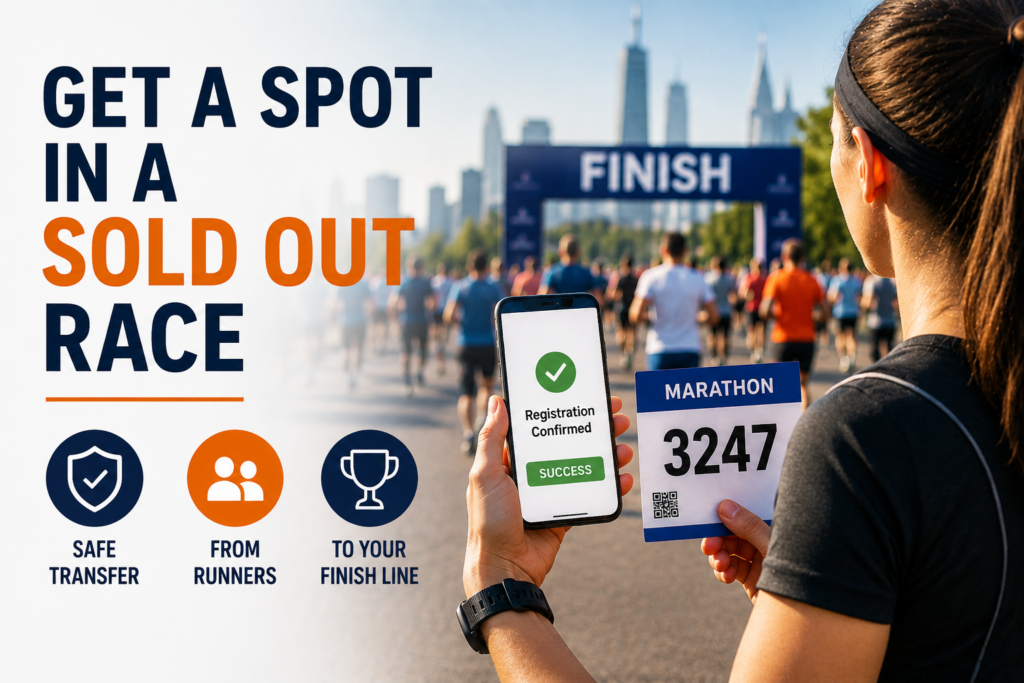
How to Get a Registration for a Sold-Out Running Race? Ultimate Safety Guide
A practical guide on how to safely secure a bib number for a sold-out marathon or half marathon. Avoid social media scammers and learn registration transfer rules.
Securing a bib number for prestigious marathons, popular city half marathons, or races within the well-known European SuperHalfs series has become an increasingly challenging task in recent years. The most sought-after sports events are often hopelessly sold out within a few short hours, sometimes even minutes, from the official launch of registrations. If you missed this initial buying window, your training efforts do not have to go to waste, as race capacity naturally opens up over the months. Thousands of runners get injured, fall ill, or face unexpected work and family commitments during long preparation periods, forcing them to pass their registration on to someone else.
📋 Why Organizers Limit Capacity and What the Transfer Rules Are
Limited field capacity is not due to a lack of goodwill from organizers, but rather a strict requirement to ensure the smoothness and safety of the entire sporting event. The number of runners on the course depends on road clearance, the logistical capabilities of aid stations, the capacity of start and finish corrals, and the ability of medical services to intervene promptly in case of health complications.
Before you decide to purchase a registration from someone, you must thoroughly study the official terms and conditions of the specific race. Every organization approaches the secondary ticket market in a completely different way, and violating these rules can have serious consequences:
- Official rebooking option: Advanced organizers, such as the RunCzech series or races in Copenhagen and Valencia, allow a complete transfer of personal data within their online system, giving you a new bib number issued directly in your name.
- Strict transfer bans (The Berlin Marathon Example): Some major races, such as the famous Berlin Marathon, strictly prohibit any private registration transfers and name changes. If you cannot participate, your registration simply expires without a refund.
- Time limits and administrative fees: The option for an official participant change is usually time-limited, most often up to one month before the race, and carries a processing fee.
- Risk of disqualification for running under someone else's name: If you hit the course with another runner's bib without an official transfer (a major risk at events like Berlin), you risk immediate disqualification, a lifetime ban from the event, and severe legal and financial complications if you require medical assistance on the course.
🎗️ Charity Registrations: A Legitimate Way for a Good Cause
If a race is officially sold out and the organizer does not allow private transfers between runners, there is another completely legal and highly reliable way to get onto the starting line. Major European and global races reserve a significant portion of registrations for partner charity organizations and foundations.
Securing a bib number through this path has specific characteristics that you should consider beforehand:
- Higher upfront costs: In exchange for a guaranteed bib number, you must commit to paying a higher amount or raising a designated financial target through a fundraising campaign among your friends.
- Funds for a good cause: Although the financial cost for the runner is noticeably higher than a regular registration fee, all funds raised go directly toward supporting cancer patients, environmental protection, rare disease research, or helping children.
- Guaranteed entry: Unlike risky purchases on the black market, a charity spot gives you 100% certainty that your registration is valid, legal, and officially approved by the race directors.
⚠️ Risks of Buying on Social Media and Common Scammer Practices
The most common places where runners desperately post their requests are comments under official organizer posts, discussion forums, and specialized running groups on social media. However, these spaces are constantly monitored by organized groups of scammers who exploit the strong emotions and desire of runners to stand on the starting line of their dream race.
The mechanisms behind these scams are highly sophisticated and constantly evolving, with the following situations being the most common:
- Fake registration confirmations: Scammers send you a modified screenshot or a fake PDF order confirmation document where the name has been changed, but the actual registration does not exist.
- Selling a single bib to multiple buyers: A single scammer can collect money from ten different runners based on one actual confirmation they own, and subsequently cut off all communication with everyone.
- Pressure for immediate payment: Attackers often argue that they have dozens of other interested buyers, forcing you into a quick decision without a chance to verify the seller's identity.
- Demanding unprotected payment methods: They will request transfers to anonymous bank accounts, cryptocurrency payments, or sending money via PayPal using the Friends and Family option, where transactions cannot be disputed.
🛡️ How to Safely Secure a Bib Number via RunResell
To avoid losing your money and enduring weeks of stress wondering whether you will even make it to the start, the best solution is to use specialized technology platforms that fully digitalize and secure the entire registration buying and selling process.
The RunResell service was created precisely to establish a transparent and 100% secure environment both for runners who cannot compete due to injury and for those looking to buy slots for races that officially support these transfers:
- Guaranteed escrow of funds: The buyer does not send money directly to the seller's private account; instead, the payment is securely held in a neutral account through the renowned Stripe payment gateway.
- Verification of the actual system transfer: Funds are released and paid out to the seller only when the buyer successfully completes the official rebooking with the race organizer and confirms receipt of the registration.
- Automated protection against fraud: Thanks to this purchasing process, the risk of a seller ceasing communication after receiving funds or selling the same code to multiple people at once is completely eliminated.
📅 When is the Best Time to Start Looking for a Free Registration?
Finding an open spot for sold-out races requires proper timing, as supply and demand shift dramatically throughout the year. Leaving your search until the final week before the start is the worst possible strategy, as panic peaks, prices rise, and the risk of fraud is at its highest.
The largest volume of legitimate registrations appears on the secondary market in two main waves. The first wave occurs approximately two to three months before the race, when the high-volume training phase ends and many runners realize that due to lingering health issues, they will not manage to build the required fitness. The second wave comes about three to four weeks before the start, when the organizers' official transfer windows close, and runners who hesitated until then are forced to sell their registrations immediately through secure platforms so they do not expire without compensation.